
Latest Event Updates
Vale Robin Williams. He never shied away from jokes about sex, politics and religion.
Today the world lost a great comedian who brought much joy and humour to millions of lives.
Robin Williams never shied away from taboo topics or important issues. He wasn’t without fault and often pointed them out himself.
Here he describes 10 years in US politics:
He also participated in many worthy causes:
http://www.politico.com/gallery/2014/08/robin-williams-in-politics/001983-028201.html
this is one of my favourites – Robin Williams and Stevie Wonder helping recruit Young Democrats!

And here he is talking about his first serious Broadway role… he was a great communicator who will be sorely missed.
Would you name your daughter after a Nintendo game? This is so cool! 🙂
Great story about one of his recent movies here: http://www.theguardian.com/film/2010/sep/20/robin-williams-worlds-greatest-dad-alcohol-drugs?CMP=twt_gu
Peter Brent (@Mumbletwits) casts a sceptical eye over opinion polls and the media’s obsession with them
I like Peter Brent (and so does Malcolm Mackerras) even though I disagree with his obsessive criticism of Wayne Swan and Penny Wong, both of whom I admire greatly. For those minor faults though Peter has a world of wisdom to share about politics and political science. Despite his reluctance to be labelled a psephologist he does have a very good grasp of election numbers, “the vibe” and “common sense” when it comes to interpreting polls and election results.
Me in Inside Story getting, um, meta on opinion polls. http://t.co/fwhiM9gqSM
— Peter Brent (@mumbletwits) August 7, 2014
As a party professional I have been privileged to have access and use of opinion polling and must admit that I have learnt to always treat it VERY carefully. Peter is correct in that it is often misinterpreted and misused, not just in the mainstream media. At a recent Campaign Management and Political Marketing Workshop at Sydney University one of the highlights was a presentation by Stephen Mills from UMR, in defence of opinion polls. I’ll share those insights in a future post!
Here are some highlights from Peter Brent’s latest work on opinion polls and pollsters (full text here at inside.org.au If-an-election-had-been-held-on-the-weekend) and if you haven’t subscribed to Inside.org.au yet, seriously, what are you waiting for?
“Within the political class, Newspoll is the most watched and most influential. Published every second Tuesday in the Australian, the poll results are interpreted for readers by the paper’s political writers. It’s that interpretation – captured in headlines and opening paragraphs – that’s repeated, largely unquestioned, on ABC radio news bulletins and in other media across the country. No one holds a gun to their heads to force them to follow the Australian line, but something about the news-creation process means that they do. It’s probably just the path of least resistance.”
“The routine preface to the media reporting of survey results – “If an election had been held on the weekend…” – is terribly misleading. No poll can tell us what result an election last weekend, preceded by a campaign, would have thrown up. A pollster contacts a person and asks him or her to imagine there is an election today – and how would you vote? It’s a preposterously hypothetical and artificial exercise: a silly question eliciting silly answers.”
“Even after an over-hyped Malaysia Airlines–induced “boost” in satisfaction ratings, the most recent Newspoll had Tony Abbott on just 36 per cent satisfaction and the government trailing in voting intentions after preferences 46 to 54. At the equivalent time in his prime ministership, Kevin Rudd enjoyed 65 per cent satisfaction and the government led 54 to 46. John Howard was on 52 per cent satisfaction and the Coalition was in front 53 to 47. But Rudd didn’t even make it to the next election. Howard did, and scraped back, and then comfortably won two more. The Abbott government might be performing “badly” in the opinion polls but today’s numbers mean almost nothing. At the same time they mean a lot, because political players can’t ignore the way they influence what the media sees as the “narrative.”
“Abbott would be aware that if the polls continue as they are, speculation will arise about his prime ministership. His actions will increasingly be interpreted through the polls. On the Labor side, new rules have provided institutional ballast to the leadership, but they can be easily reversed. One day the forty-fourth parliament will end, and we’ll be starting a new one, most likely with a re-elected Coalition government. The mid-2014 polls will be long forgotten, and probably, with hindsight, judged laughably unreliable.”
If you have time after reading that article above by Peter you might also want to read the one in the link below. As I said on twitter when I shared it – I don’t agree with all of it but I’m still quite keen to read part 2! 🙂
Me rating various MPs' political skills. Beginning with one Georgey Brandis: http://t.co/wnstxkKtlr
— Peter Brent (@mumbletwits) August 8, 2014
Political Thriller to be filmed in Canberra Australia
From the Canberra Times today:
A multimillion-dollar six-part fictional mini-series shot in Canberra, and peeling back the capital’s layers of power, is now in the development stage.
Based on The Mandarin Code and The Marmalade Files books by journalists Steve Lewis and Chris Uhlmann, the mini-series is in the hands of production company Matchbox Pictures, known for its work on The Slap and The Straits.
A statement from Foxtel confirmed it would be working with Matchbox Pictures with funding support from Screen Australia. Prime Minister Tony Abbott was expected to make the announcement while launching the book at Parliament House 10.30am Wednesday.
Chief Minister Katy Gallagher said it would be fantastic for Canberra.
“There’s nothing bad about this, it’s all great,” Ms Gallagher said.
“For anyone who loves the city it will be wonderful to watch.
“Just the exposure that [Canberra] will get through Screen Australia.
“What we all love about the city is going to be projected as part of this wonderful story by two local authors and respected journalists.”
Pene Lowe, owner of Hansel and Gretel cafe at Phillip featured in two key scenes in The Mandarin Code, was thrilled about the news and about her shop being included in the fictional storyline.
“We need to put up a little sign saying ‘spies corner’,” Ms Lowe said…
The Hard Sell – what would Dee Madigan do with Jack Lyons?
I was distracted during my lunchbreak today by the latest political scandal to hit the front pages. This one was the story of the now disendorsed Liberal candidate Jack Lyons from Bendigo.
It’s a real shocker.
Sometimes in politics leaders have to make tough, difficult decisions and this is one where you have to give the Victorian Liberals some credit… but also ask why it took so long? Why didn’t anyone ring an alarm bell earlier, or was it rung and ignored until the cost in advertising and marketing the deteriorating Liberal brand in Victoria become too high?
Maybe the answer lies in one of the latest books on political advertising and marketing (currently on my ridiculously long ‘to-read’ list) https://www.mup.com.au/items/144842 ?

It’s worth following the link just to see Dee Madigan’s amusing promotional trailer. http://youtu.be/nOfvD7MpAC0
In case you don’t subscribe to the Australian. Today there’s a short review and interview about Dee’s new book by Troy Bramston (which can be found and read via Google): http://www.theaustralian.com.au/national-affairs/labor-cant-blame-media-for-2013-election-loss/story-fn59niix-1227013342421
“LABOR’S election advertising strategist, Dee Madigan, says the party cannot blame the media for its defeat last year given its own communication failures and reveals she opposed a push from Kevin Rudd’s inner circle to target News Corp Australia over allegations of media bias.
“Certain forces within the PM’s office tried to push this as part of the (campaign) narrative,” Ms Madigan writes in The Hard Sell : The Tricks of Political Advertising.
“Media bias is just not something that resonated with the swinging voters.”
Ms Madigan’s book, to be launched today by former Queensland Labor premier Anna Bligh, exposes other divisions over campaign strategy, including the “A New Way” slogan and Kevin Rudd’s micromanagement of campaign operations.
While criticising The Daily Telegraph’s election coverage, Ms Madigan reveals the issue of media bias did not rate as an issue with voters in the party’s focus groups.
“I remember one focus group at which the facilitator tried over and over to see if there was any interest in media bias,” Ms Madigan writes. “One fellow finally piped up and said, ‘Well I do think the media in this country is biased … Collingwood always gets a bad rap’.”
Ms Madigan describes Labor’s “A New Way” slogan as “a terrible idea” and says it was imposed on the campaign by Mr Rudd, who “wanted it”.
“While ‘A New Way’ was a decent strategy for Rudd’s comeback, it should never have been the strapline of the positive ads,” Ms Madigan writes. “Because unless we were planning on staying totally positive … the entire press would rightly call us hypocrites.”
When asked if the slogan “A New Way” would appear with ads Ms Madigan was shooting, her response was blunt: “Only if we want every single f..king person to laugh at us.”
Mr Rudd’s strategist, Bruce Hawker, wrote in his campaign diary that the slogan was recommended by advertising leader Neil Lawrence, that it tested well, and it was agreed to at meetings attended by Ms Madigan.
The Hard Sell (MUP) examines advertising, particularly political advertising, in Australia. It couples extensive academic research with the author’s experience in corporate, community and political communications.
Ms Madigan says Labor stopped referring to “Gonski” as a label for its school reforms as “it had no emotional pull for parents” unlike the term “education funding”.
Although Ms Madigan strongly defends Labor’s economic management she says the party failed to communicate this effectively.
“We never did manage to sell the economy. As tempting as it would be to put all the blame at the feet of a largely unfriendly press, the reality was that much of the problem lay with Labor’s failure to sell its handling of the global financial crisis.”
[new article] Advertising strategist @deemadigan says Labor can’t blame the media for its ’13 defeat in a new book http://t.co/ByDcDyvBJD
— Troy Bramston (@TroyBramston) August 4, 2014
Updated 14/08/14 – Dee Madigan and Stephen Mills both appeared with Rob Sitch on ABC Melbourne to discuss the “tricks of political advertising and campaigning” (their words not mine!) listen here:
Highlights of the podcast include:
Jon Faine’s co-host is director, producer, screenwriter, actor and comedian, Rob Sitch whose latest ABC TV series Utopia, premiered last night at 8:30pm.
Their first guest is creative director, author and political commentator, Dee Madigan. Her book is called The Hard Sell: The tricks of political advertising.
“Negative ads work and the reason they work is because they hone in on the people who are disengaged,” she says.
“Disengaged voters are far more likely to vote against a party than for them.”
Then they are joined by Dr Stephen Mills, former speechwriter to Prime Minister Bob Hawke and political journalist, who now lectures at the Graduate School of Government at the University of Sydney.
When asked about the campaign directors that he interviewed for his latest book, The Professionals: Strategy, Money and the Rise of the Political Campaigner in Australia, he says, “They’re intelligent, they’re focused, they are loyal party servants and they are doing their job which is to win the election.
“I think the real reason Rudd lost from a campaign point-of-view, is that he had no discipline in his campaign strategy.”
and no discussion about political advertising would be complete without the inclusion of this explanatory dissection of negative Liberal TV ads from 2007:
Could this happen today? around 60,000 Australians obliterated in a distant war 100 years ago

You can’t study the history of politics and campaigning without being exposed to the historical facts around Australia’s past involvement in wars and how governments rose and fell during these conflicts in our recent history. Despite our relative isolation and peace, war has had a big impact on Australia’s past and its current psyche.
I respect current and past members of Australia’s armed forces and the sacrifices many have made in the past (and today) in the name of our nation. I think our many war memorials and ANZAC Day commemorations serve as an important reminder of the massive sacrifice that has been made by Australian service men and women in the past, sometimes in wars and conflicts they didn’t really understand or believe in. I’m also a firm believer in the need for a strong professional defence force that is capable of defending Australian interests here and abroad as well as assisting in humanitarian missions in warzones.
But as we approach the centenary of Australia’s involvement in WW1 (‘the Great War’, ‘The War to end all wars’, etc.) and the federal government starts spending the millions of dollars it has allocated to this anniversary, it’s worth asking the question would sending a large army to a foreign war be possible today? Would modern Australian society accept a slaughter of the same magnitude today as we did in 1914-18 and what would the public’s reaction be to a call to arms on such a large scale for a foreign conflict on the other side of the world?
I think it’s hard to judge these past decisions because we are culturally and educationally a different society now. It’s easy saying “it would/wouldn’t happen again” without explaining why. I suspect it couldn’t happen again unless we believed there was an existential threat to Australia. Back then, when our armed forces fought under a Union Jack and our national anthem was “God save the King” there was an existential threat to the UK and its allies from Germany. This threat to the “mother country” was all that mattered to many that enlisted and fought and died under the Union Jack and in Australia’s name.
I also wonder if Australia would have been a different place now, had those men and women who died 100 years ago been left to live, marry and have children? For a start, our population would be larger now and perhaps some of them would have been great leaders or scientists and business minds, but are now lost for eternity.
From the Australian War Memorial website we can see:
Enlistment statistics, First World War
Enlistments by State
Australian population 1914—1918: approximately 4.9 million
416, 809 Australians enlisted for service in the First World War, representing 38.7% of the total male population aged between 18 to 44.
| State | Number enlisted |
|---|---|
| Queensland | 57,705 |
| New South Wales | 164,030 |
| Victoria | 112,399 |
| South Australia | 34, 959 |
| West Australia | 32,231 |
| Tasmania | 15,485 |
Sources:
A.G. Butler, Special problems and services, Official history of the Australian Army Medical Services in the war of 1914—1918, vol III (Canberra: Australian War Memorial, 1943), p 890.
Commonwealth Bureau of Census and Statistics, Official yearbook of the Commonwealth of Australia, no 12, 1919 (Melbourne: Albert J Mullett, 1919).
At end of war
| Outcome | Number affected |
|---|---|
| died | 58,961 |
| wounded | 166,811 |
| missing or prisoners of war | 4,098 |
| suffered from sickness | 87,865 |
At almost 65%, the Australian casualty rate (proportionate to total embarkations) was among the highest of the war.
Meet an election specialist – Peter Brent (aka @mumbletwits)
A couple of weeks ago I published an interesting interview with famous Australian Psephologist Malcolm Mackerras. At the end of the interview I asked him for some suggestions about other psephologists or election specialists that I should add to my list of interview targets. One of his highest recommendations was Peter Brent, who Malcolm seemed to be very fond of. I have met Peter several times over the last decade or so, usually at political science conferences and seminars around the country. I also got to know Peter while he was still working on his PhD thesis at ANU on the topic of the AEC “The Rise of the Returning Officer”. He reminds us all about the very unique creature that is the AEC which, as Australians, we should all be very proud of (despite what Clive Palmer suggests).
I also developed a bit of respect for Peter over the years as I watch him regularly deal with armchair electoral generals (initially mainly through his blog and then, as it became a mainstream medium, through twitter) with his standard straight-bat dryness and sarcasm. He’s a real sensation on twitter and you should all follow him immediately, although I suspect if you’re reading this many of you already do. BTW I’m not the only one who thinks Peter has a particularly dry wit as the following tweet attests.
@mumbletwits Yes, a plug for Mumbles in there. “Dry cynicism”…. You think?!! It’s sometimes so dry it shrivels my brain.
— Grasshopper (@BuPaul) July 31, 2014
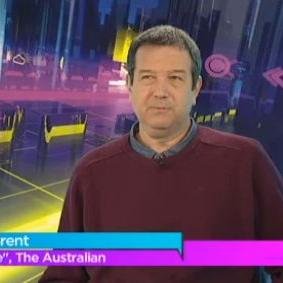
Also, to hammer the point home, when I asked Peter to provide me with his preferred portrait for the interview, this is what he sent:

So tell me about yourself. Who are you in a nutshell? Left-brained, observant, neurotic.
Where do you live/work/study/teach? Canberra, from home and parliament.
What compels you to write and research about politics? It’s an illness. I used to suffer more from it. I don’t consume as much political news as I once did, which is kind of ironic, or paradoxical, as I now write about it for public consumption.
What do you love about politics? Not much, particularly the Australian version. I used to believe it was superior to, for example, American and British politics, but no longer do. Not sure if this is chiefly due to changing perception on my part or changing reality.
Is there anything you don’t like about modern politics? Lots. The adversarial nature, Question Time is a travesty. The profession of politics encourages some people to misrepresent what opponents have done and misrepresenting their positions. For some, it must corrode the soul; you would not be a politician for quids. This no doubt applies across most democracies, but probably particularly so here. Like many, I think the parties’ obsession with polling and research is a problem. Labor seems particularly afflicted with WestWingitis. Just between us, party polling gurus are not as clever as the political class believes.
Compulsory or Voluntary voting? Voluntary, but I don’t feel strongly about it. There are ok arguments either way. Compulsion is I think too coercive and I don’t think the benefits outweigh the negatives. If we got rid of compulsion, turnout would drop and we’d get a better idea of the level of political engagement, at federal and each state level. That’d be a good thing.
Who are your favourite writers? Don’t have any. When I was young I loved Orwell, like many. (Still like him!) My reading tastes are more low-brow than they used to be. For example, I always snap up the latest Michael Connelly book.
What are your favourite websites and news sources? Oh … you know, this and that. This week I downloaded and sent several long reads to Kindle from New Yorker magazine.
What’s the first thing you do each morning? Computer on (if off). Coffee on. Feed cats if first one up. Sit at computer. Write. I used to listen to Radio National Breakfast but now this is my prime writing time and the radio would be distracting. A great pity.
What is your one recommended must-read for aspiring psephologists? Read more on electoral law, something I don’t do enough.
What’s your favourite political movie/book/documentary/TV series? Sorry, another “don’t have one”.
But in the late 1980s I loved “A Very British Coup”, watched it several times on video. Ray McAnally fantastic as a Labour PM from Yorkshire. It would be very dated now. Primary colours was an enjoyable book—and movie. Wag the Dog was good. Haven’t see the US version of House of Cards (the UK one a couple of decades ago was pretty good, not fantastic imo).
As a rule I no longer read political books—that is bios and memoirs—because I’m much more cynical about the process—all that that backscratching and three-act storytelling (which is prevalent in political journalism per se).
Having said that, Don Watson’s ‘Recollections of a Bleeding Heart’ was a ripper, albeit overwritten. Perhaps the last one I’ve read. No, someone gave me the Latham Diaries and I read that. And I bought Lindsay Tanner’s book; it was ok. (Speaking of that book, I am regularly surprised at what I perceive as an absence of electoral perception—an understanding of what makes voters do what they do—from senior political players. Well, they don’t see things the way I do. Most don’t I suppose.)
Is there a funny or brilliant political ad you’d like to share? Nope!
What are you currently reading or working on? Kindle currently has two books: “My Promised Land” by Ari Shavit and a biography of the Beatles. (First book I’ve read about either.)
I should also ask why are you interested in electoral behaviour? My brain is possibly a bit deformed. At school I was very good at maths. In one aptitude test I scored in the top couple of percentiles in maths but actually below average in English comprehension. Then I began a science degree but kind of bombed out and left uni. A few years later I went to uni and studied Arts; I became interested in politics, addicted really, including the electoral side. Contemplating two-party-preferred, playing with Malcolm Mackerras’s pendulum.
My statistics skills are quite limited though.
Being comfortable with numbers might lead some people to be susceptible to numerical explanations of electoral behaviour, but in my case it’s had the opposite effect: I have little time for “analysis” along the lines of, for example, claiming such-and-such is worth X per cent of the vote. I detest that stuff. Of course events and personalities matter, and in theory their influence on outcomes are quantifiable, but humans’ tools are way too flimsy to do it and it’s dishonest to pretend otherwise.
Peter can be followed on twitter here: @mumbletwits
His most recent writing can be found here on his blog.
And this is what he really looks like!
Meet an election specialist – Malcolm Mackerras
This interview is the first in a series which I had originally planned to title “Meet a psephologist” and use as a series of interesting articles about people who study, work in and write about elections. However not everyone agrees with me that there is a psephologist in all of us (or that there is a foodie in all of us), so in order to avoid scaring away potential interviewees it is now titled “Meet an election specialist” but I still have a list of psephologists (professional and amateur) as well as academics, practitioners and writers on my to-do list!
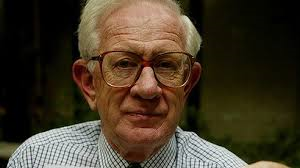
I recently had the pleasure of catching up with Australia’s second-most-famous psephologist while he recovered from some hip surgery at Canberra Hospital. Malcolm Mackerras is one of Canberra’s living legends. Anyone who is even slightly interested in politics and elections would be familiar with his writing and his famous federal electoral pendulum, which has had many imitations and which he has himself adapted for many other elections. Malcolm’s first published work on Australian politics was written in 1965, while he was working as a research officer for the Liberal Party. In 1970 Malcolm became an academic and had various posts at UNSW, RMC Duntroon, ADFA and now at the Public Policy Institute, Australian Catholic University.
Malcolm’s Wikipedia entry reminds us that he is “famous for making predictions about election results” and “he claims a ‘win’ ratio of ‘two in three’ and adds “at least I’m not boring”!
Malcolm is certainly anything but boring! He is happy to discuss just about anything related to democracy and elections and has a wide-ranging expertise on Australian politics.
I asked Malcolm a series of questions and his unedited answers are listed below:
Tell me about yourself Malcolm. Who are you in a nutshell? In academic parlance I’m a political scientist. Although I’m semi-retired I currently work at the Australian Catholic University in Canberra as a Visiting Fellow. I’m also still writing about elections and have appeared regularly to discuss politics on “Switzer” which is on SkyNewsBusiness. I had seven siblings, including a fraternal twin Colin Mackerras, a leading China specialist at Griffith University. I was born in 1939, worked on my first campaign handing out How-To-Vote cards at a referendum in 1951, joined the Liberal Party when I was 16 in 1955 and have followed every election and by-election in Australia ever since. My academic career started when I became what was then known as a “Research Scholar” at ANU in 1970. By-elections are fascinating. Did you know we had 10 by-elections in Australia between 1951 and 1954? Nine were caused by the death of the local member. These days healthcare has improved so much that we rarely have deaths in political office and most by-elections are caused by resignations.
Where do you live/work/study/teach? I live in Campbell (Canberra’s inner north) and work mainly from home. I have an office at ACU where I still teach occasionally.
What motivates you to write and research about politics? It fascinates me! I’ve also been fortunate to be in the middle of many interesting political contests. In 1975 I had an article published in the Canberra Times which I’d written 10 days before. I had speculated in the article that the political stand-off in the Senate was getting to the point where Kerr may have to sack Whitlam to break the deadlock. 10 days after I wrote the article it was published. Later that morning Kerr sacked Whitlam. I was actually on radio at 11am prior to the dismissal answering questions about the article and heard afterwards what had happened. That afternoon I was flown to Melbourne to be interviewed about the article and the dismissal an appeared on the TV news that night. It was my best prediction ever! I was also the only psephologist who predicted Howard would lose Bennelong.
I also believe that our Constitutional Monarchy is a unique and beautiful democratic process. Australia has been very fortunate to inherit such a good system of government and also fortunate that it has been modified and evolved so well. Our system is one of the best in the world and I still believe the Republican argument lacks a compelling case. Both our houses of parliament are relatively well populated with good representatives and both function well. The senate is genuinely semi-proportional and serves an important role as a house of review. We have a symbolic head of state (the Queen) and a constitutional head of state (the Governor General). Since 1930 when Jim Scullin established the current rules, the Prime Minister effectively selects the Governor General. This system allows an unsatisfactory Governor General to be replaced easily, as has happened, and this is a model of common sense. A popularly elected President or even one elected by a Parliament, would be very difficult to replace. Australian democracy has worked very well compared to other democracies and we shouldn’t change too much without very good reason.
Is there anything you don’t like about modern politics? There is far too much excessive partisanship in modern Australian politics, with the current Prime Minister being most to blame for it. He is in my opinion the most partisan PM we’ve ever had. Abbott is far more partisan than Howard or Fraser and has damaged the office as a result. The PM’s position should be statesman-like and it should not be as partisan as Abbott has made it.
Compulsory or voluntary voting? Definitely compulsory voting. It makes the results more reflective and representative and if it aint broke why fix it?
Do you have a favourite writer? Paul Kelly
What are your favourite websites and news sources? I still read three newspapers each day: The Canberra Times, The Sydney Morning Herald and The Australian. My favourite websites include Crikey, Antony Green’s blog, Peter Brent’s Mumble blog on Crikey and William Bowe’s Pollbludger website. I also enjoy watching Insiders on Sunday mornings.
What’s the first thing you do each morning? I’m an early riser. I read my newspapers after I pick them up off the driveway. The Canberra Times usually arrives about half an hour before the SMH and Australian.
What is your one recommended must-read for aspiring psephologists? Read Mumble. Peter is good as a psephologist and he also does political commentary well. Peter calls a spade a spade and his dry cynicism can be entertaining.
What’s your favourite political movie/book/documentary/TV series? The Victory was entertaining. The Stalking of Julia Gillard by Kerry Anne Walsh was also a very good book. I recommend both. The book Battlelines exposes Abbott’s dishonesty. He’s clearly a centralist, yet he used federalist arguments to recently argue against and abolish the mining super-profits tax.
Is there a funny or effective political ad you’d like to share? I thought the anti-workchoices ads from 2007 were particularly effective.
What are you currently reading or working on? I’m working on a book collecting all my writing, beginning in 1957 and I’m about a quarter of the way through. I also wrote two recent articles (in the Australian and Canberra Times) opposed to the Electoral Matters Report on Senate Elections. I disagree with the recommendation to do away with party tickets. The Senate system currently works quite well and I think the main arguments are being made by the government because it doesn’t like the result of what happened in the Senate race in 2013. In the 2013 federal election Labor lost 17 seats, all of which went to the Liberal or National parties. However in the Senate there were six seats lost. Of the seven Senate seats lost in 2013, three went to PUP (one each in Qld, Tasmania and WA), one went to Family First in SA, Rickey Muir picked up a Liberal Senate spot in Victoria (which was meant to be won by Kroger), one Liberal Democrat was elected in NSW and one Green in Victoria.
Thank you for your time and frank answers Malcolm Mackerras!
If you’d like to read more from Malcolm then check out some of the links below:
http://www.switzer.com.au/the-experts/malcolm-mackerras—political-expert
http://www.crikey.com.au/author/malcolmmackerras/
http://www.canberratimes.com.au/execute_search.html?text=malcolm+mackerras&ss=canberratimes.com.au
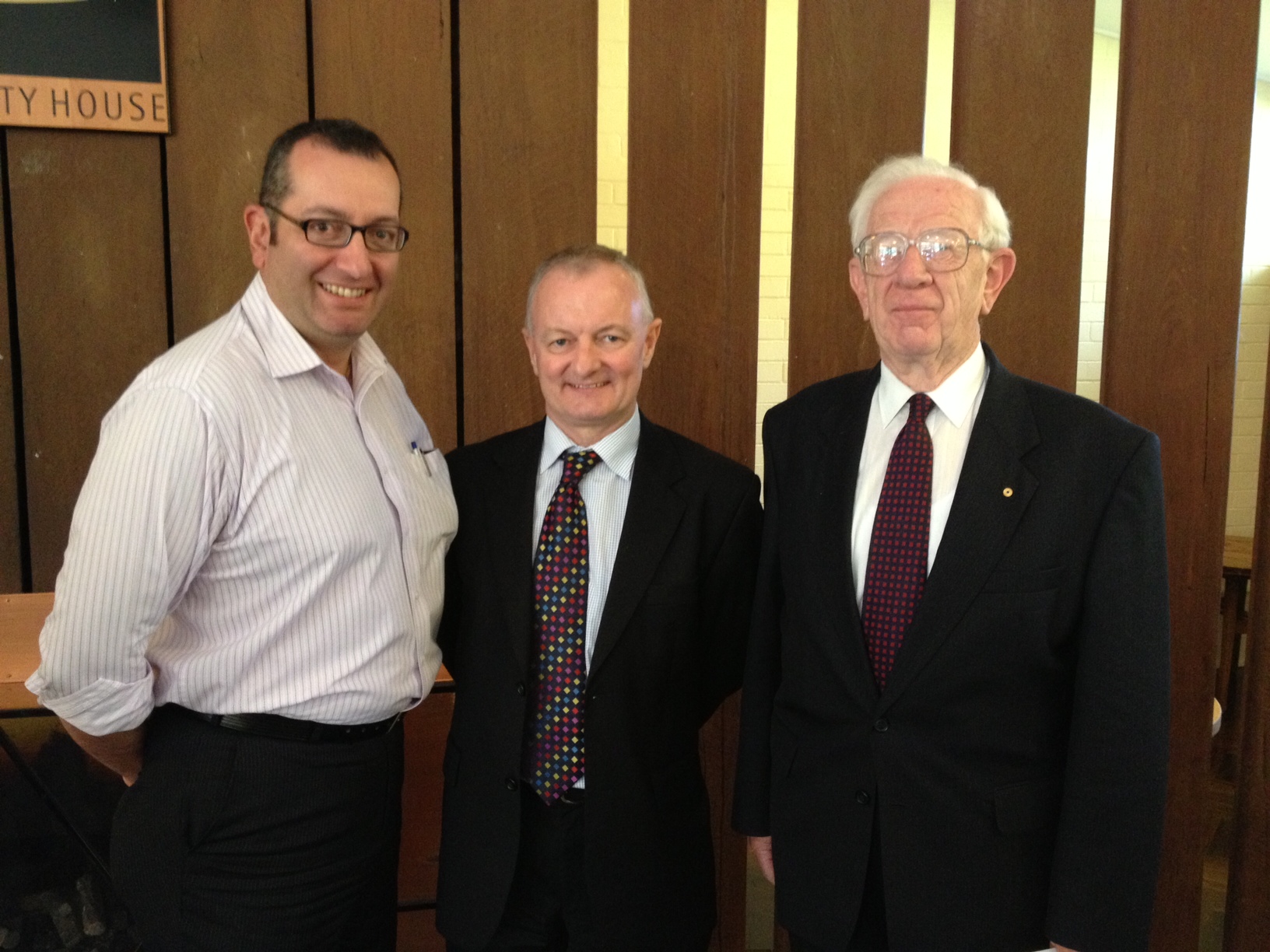
…and here’s a photo from last year which gives me some real cred as an authentic psephologist’s groupie.
Don’t share your campaign strategy with people on the internet
Oh dear, look what is being shared on facebook today: http://www.scribd.com/doc/235287519/2014-Michelle-Nunn-Campaign-Memo
Who I hear you ask is Michelle Nunn? Read this if you want to know more: http://www.michellenunn.com/
Or read this if you just want to know more about deciphering the leaked strategy: http://www.washingtonpost.com/blogs/the-fix/wp/2014/07/28/how-to-read-the-leaked-michelle-nunn-campaign-plan/
Very interesting excerpt about the ALP’s first professional campaign director from Stephen Mill’s new book!
If you haven’t had the pleasure of reading Steven Mill’s new book The Professionals (what are you waiting for?) you can enjoy a short excerpt on the rise and fall of Labor’s first party professional Cyril Wyndham on the Inside.org.au website here: http://inside.org.au/the-rise-and-fall-of-labors-first-party-professional/#sthash.13QPtIMP.dpuf
Here’s a short ‘excerpt of the excerpt’:
Wyndham established Labor’s national headquarters in Ainslie Avenue in central Canberra; they were recalled by one journalist as “a small, ratty office suite at the top of the world’s most ancient lift.” The party’s “grand plans for an adequately staffed national secretariat” to support Wyndham were never delivered. In 1967 the full staff complement was “Cyril plus two” secretaries. But Wyndham lived up to the “mighty atom” billing. He was an impeccable shorthand typist and minute keeper, and immediately improved the party’s administrative efficiency. He analysed voting statistics to trace shifts in popular sentiment at national and state level. A fluent pamphleteer, he articulated the party’s case against communism and the National Civic Council, both at the direction of the federal executive, and promoted the party in lengthy articles in public journals. He wrote speakers’ notes, “to see that everyone was speaking the same language in Western Australia and New South Wales.” He also became an articulate internal critic of party attitudes and structures – showing the courage that he had advocated years earlier, no doubt, to advise his employer about right and wrong. In a speech to the Young Labor Association in 1965 he attacked those who “prevaricate our policy, indulge in the futile exercise of factional strife, and behave like a collection of political delinquents.” In 1968 he reportedly told the Labor Women’s Organisation that aspects of the party were “ridiculous, absurd and criminal.” Most ambitiously, he embarked on the difficult and dangerous task of reforming Labor’s antiquated national decision-making structures. The so-called “Wyndham Plan” was a wide-ranging proposal to enlarge and reconstruct the federal conference and the federal executive, provide rank-and-file members with direct input into the federal party, improve party finances, and broaden the party’s appeal to women and young voters. Under the existing rules, it was the executive, not the popularly elected parliamentary leaders, who essentially determined party policy – as had been dramatically highlighted in March 1963, when a special national conference was held to deal with the Liberal government’s proposal for a joint US–Australian military base at North West Cape in Western Australia. Arthur Calwell and his deputy, Gough Whitlam, had addressed the thirty-six delegates at Canberra’s Hotel Kingston, urging them to accept the base, but they had no say in the conference’s deliberations, and no vote. Instead, Calwell and Whitlam were photographed outside the hotel at midnight as they waited to hear the outcome. The Daily Telegraph’s front-page splash condemned the incident as “the all-time nadir of Labor parliamentary leadership.” Menzies coined the “faceless men” tag to deride the powerful and anonymous figures whom he accused of running the Labor Party. A key element of the Wyndham Plan was to include the parliamentary leaders on the federal executive.
And here’s where you can buy the book and enjoy it all at your leisure: http://www.blackincbooks.com/books/professionals
The 2012 ACT Election – two more perspectives
A few days I ago I shared a paper on the 2012 ACT Assembly election written by local academic and historian Chris Monnox. Today I’m adding one from political writer and researcher Terry Geisecke as well as the analysis and summary of that election from the federal Parliamentary Library.
Terry’s paper is available online via Australian Policy Online website: http://apo.org.au/commentary/act-election-2012 and its contents helped during the writing of the official 2012 ACT Labor Campaign Report.
giesecke_the_act_election_2012
The Federal Parliamentary Library (in case you weren’t aware) is an absolute treasure trove of useful research material about politics, campaigning and Australia history and current issues. In December 2012 Research Brenton Holmes wrote a terrific paper explaining some of the highlights of the 2012 ACT Assembly election. The full paper, with extensive references) is available here: http://www.aph.gov.au/About_Parliament/Parliamentary_Departments/Parliamentary_Library/pubs/BN/2012-2013/ACTElection2012 and I’ve also attached a pdf version below:
parlInfo_backgroundnote_ACT2012
Happy reading!
 CampaignsDownUnder